
Cheap Websites Cost More:
The Hidden Price of Losing Clients

- Written by Mila Skriptunova onJuly 8, 2026
“I write to share practical lessons from real web development projects, from frontend architecture and responsive design.”
At first, choosing cheap websites or low-cost solutions feels like a smart move.
Lower costs. Faster launch. Less stress.
Sounds like a win, right? 🙂
Not exactly.
Because most businesses don’t lose money by overspending.
They lose it by choosing the wrong foundation.
⚠️Cheap Websites Don’t Mean Smart. They Mean Limitations
When you choose a low-cost website or development solution, you’re not just saving money, you’re accepting limitations.
This usually means lower performance, a fragile structure, and little to no scalability. At first, everything looks fine. The site loads, the design looks decent, nothing seems broken.
But in reality, it’s like building a beautiful house on sand. Sooner or later, things start shifting.
🐍Cheap Websites Cause Slow (and Sneaky) Damage
Cheap solutions don’t fail immediately. In fact, that’s what makes them dangerous.
They work just well enough to avoid suspicion. Everything appears functional… until subtle problems begin to surface and grow over time.
You can check your website’s loading speed and usability metrics using Google PageSpeed Insights.
1. 😬 Your Website “Works”… But Doesn’t Convert
In fact, research shows that even a one-second delay in page load time can drastically drop conversion rates.
On the surface, everything looks fine, pages load, buttons are clickable, forms exist.
But users don’t interact. They don’t click, they don’t fill out forms, and they don’t become clients.
Even small issues can cause this: slight delays, poor mobile experience, or unclear page structure. Users won’t explain what’s wrong, they’ll simply leave. 🚪
If this sounds familiar, you might be dealing with deeper conversion issues. I break this down in detail in my article:
👉 Why Website Is Not Getting Clients (Even If It Looks Professional)
Because in many cases, the problem isn’t how your website looks, it’s how it actually works.
2. 🧱 Growth Hits a Wall
For many, this means using a flexible and well-supported CMS like WordPress, which offers the scalability needed for long-term growth.
As your business grows, your website should grow with it. But cheap solutions are rarely built for that.
You try to add features, connect tools, or improve functionality and suddenly everything becomes complicated, unstable, or impossible to implement.
At some point, you hear the phrase no one wants to hear:
“We’ll probably need to rebuild this from scratch.”
3. 💳 You End Up Paying Twice
Cheap rarely stays cheap.
Instead of investing in growth, you start spending time and money fixing problems: plugin conflicts, unexpected bugs, and performance issues.
You’re no longer building something better, you’re maintaining something fragile. That’s not development. That’s survival mode.
4. 📉 Marketing Turns Into Wasted Budget
You invest in ads, SEO, or content. Traffic starts coming in.
But conversions don’t follow.
Why? Because your website isn’t built to support or convert that traffic. It becomes a bottleneck instead of a growth tool.
It’s like inviting people into a half-finished house, they won’t stay.
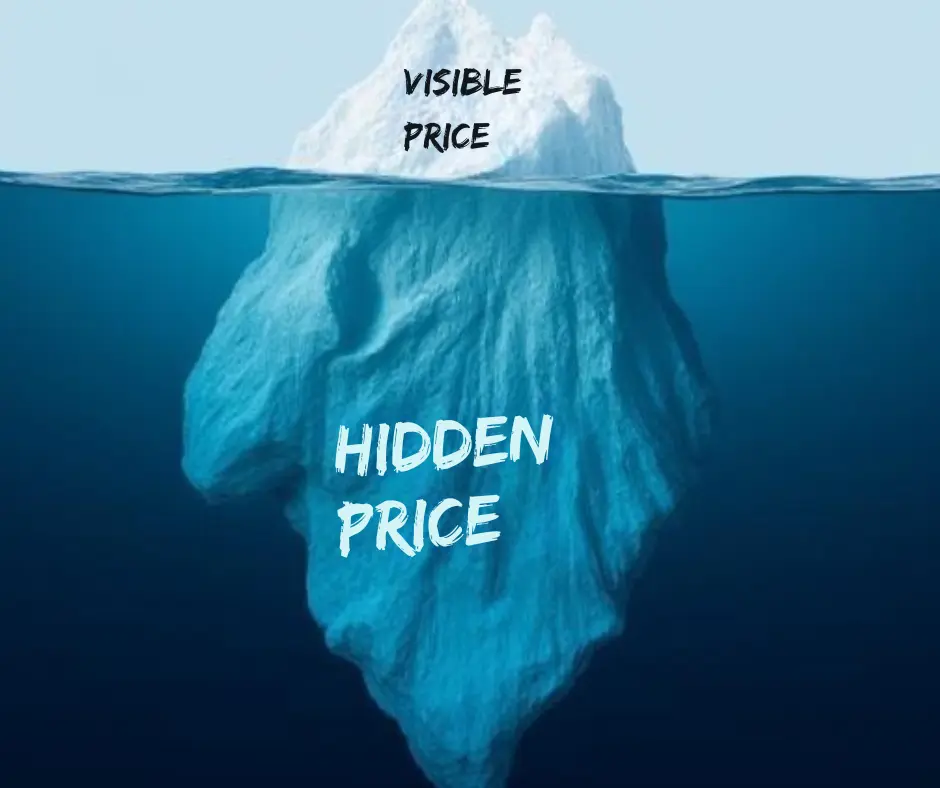
👀 Cheap Websites: The Most Expensive Part Is What You Don’t See
Most businesses choose cheap websites to save money, not realizing what it actually costs them later
The biggest loss isn’t always visible.
It’s the clients who didn’t trust your website, the users who left without interacting, and the opportunities that never turned into revenue.
There are no clear errors or warnings, just silence where growth should be.
🚀 What Smart Businesses Do Differently
Businesses that scale don’t treat their website as a quick task.
They treat it as infrastructure.
They invest in solid architecture, performance from the start, and systems designed to grow with their business.
Because they understand one simple truth: fixing a bad foundation always costs more than building it right.
💡A Better Question to Ask
Instead of asking, “How can I make this cheaper?”, ask:
“How can this support my business long-term?”
That shift in thinking is where real return on investment begins.
Final Thought
Cheap solutions don’t look like a problem at first. That’s exactly why they’re risky.
They seem “good enough” until they start slowing you down, limiting your growth, and quietly draining your revenue.
And by the time you notice, you’re already paying the price.
Not Sure If Your Website Is Holding You Back?
Get a professional audit and uncover what’s holding your business back.